
Imagine this: a speck of dust a hundred times finer than a human hair settling on a chip under production may scrap wafers worth millions. A tiny microbe contaminating life-saving medicine during filling could trigger irreversible health hazards. Bacteria accidentally introduced into a surgical operating room can directly endanger a patient’s life.
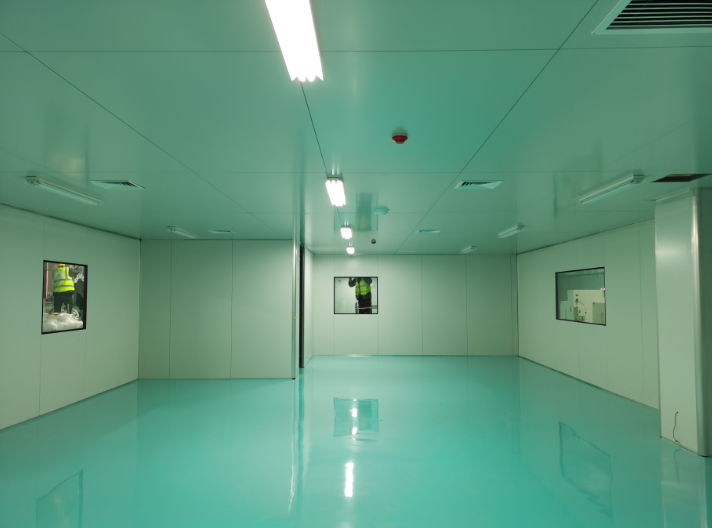
These facts explain the fundamental purpose of clean rooms. Far from being merely an extra-clean room, it serves as a lifeline and innovation stronghold built upon science and sophisticated engineering.
Clean Room Classification Standards
A tech-sounding term, a clean room has a clear core definition: an enclosed space that precisely and effectively controls airborne particulate concentration, temperature, humidity, pressure, airflow distribution, noise, vibration, illumination and other parameters via engineering technologies.
Its core mission is to establish and sustain a controlled dust-free environment.
How dust-free can it be? It is not judged by subjective feeling, but graded by official standards.
Cleanliness is categorized under ISO Class ratings:
● ISO Class 1: No more than 10 particles ≥0.1 micrometer per cubic meter. The highest cleanliness level, applied to cutting-edge nanometer chip manufacturing.
● ISO Class 5: No more than 3,520 particles ≥0.5 micrometer per cubic meter, equivalent to roughly 100 particles per cubic foot. Widely used in sterile pharmaceutical filling and high-grade surgical operating rooms.
● ISO Class 7 / ISO Class 8: Relatively lenient standards for precision assembly and medical device manufacturing with moderate cleanliness requirements.
These cold numerical standards define the safe air baseline supporting high-tech industries and human health.
Core Technologies Supporting CleanRooms
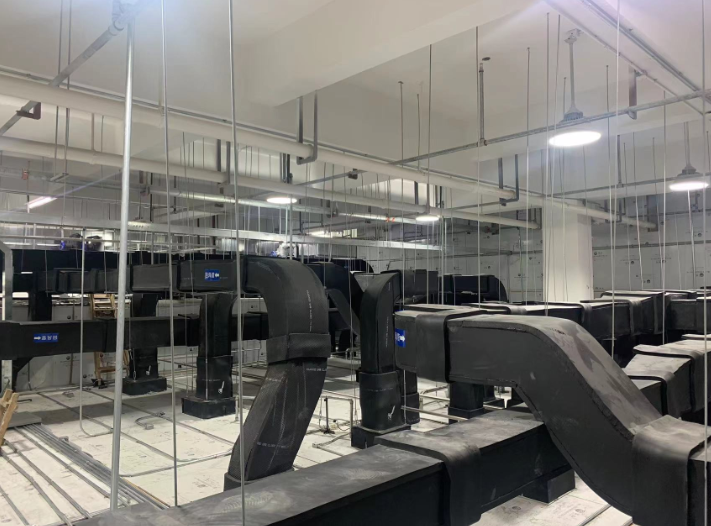
A sophisticated set of engineering systems underpins the dust-free environment:
Air Filtration System
Known as the lung of a clean room. HEPA filters act as primary barriers, while ULPA filters are adopted for stringent scenarios such as chip fabrication. Air is repeatedly purified through these ultra-fine screens before entering the room.
Air Supply & Flow Control
● Laminar Flow: Air flows uniformly in vertical or horizontal directions, forming an invisible air curtain that swiftly carries particles to air return outlets. It is the optimal choice for top-tier clean rooms.
● Turbulent Flow: Air circulates unevenly to dilute and reduce indoor particle density, suitable for areas with lower cleanliness demands.
Positive Pressure Maintenance
Indoor air pressure stays higher than adjacent areas, creating an air barrier. Clean air flows outward when doors open, blocking unfiltered polluted air from outside.
Architectural Structure & Materials
Walls, ceilings and floors adopt smooth, non-porous, dust-free and easy-to-clean materials. All joints are sealed, lights are embedded, and furniture features streamlined designs to minimize dust accumulation.
Personnel & Material Decontamination
Human activities constitute a major pollution source. Strict access regulations are enforced:
● Air showers blow off surface dust from staff clothing with high-speed purified airflow.
● Full protective suits including hoods, masks, gloves and shoe covers prevent skin debris, hair and fiber dispersion.
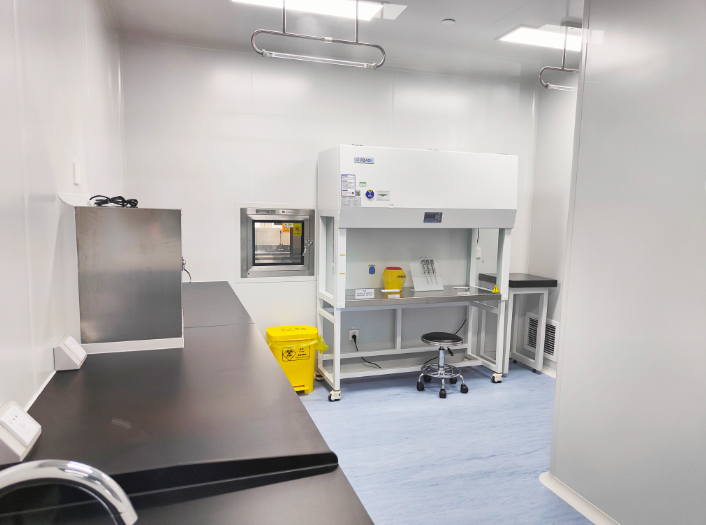
● Materials are cleaned and delivered through sealed transfer windows to avoid external contamination.
The extreme dust-free environment fuels vital industries and technological advancement.
Industrial Applications
Semiconductor & Microelectronics
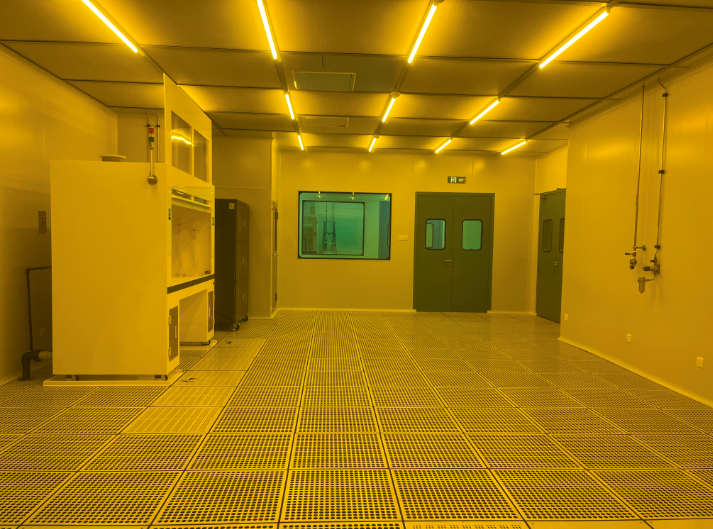
Modern chips feature nanoscale circuits. Even microscopic dust may cause short circuits, open circuits or functional defects, ruining entire wafers. Extreme ultraviolet lithography machines demand cleanliness exceeding ISO Class 1 standards. Clean rooms lay the foundation for smartphones, computers and all smart devices.
Pharmaceutical & Biotechnology
Sterile injections, eye drops and implantable medical devices require absolute sterility, as microbial contamination may lead to severe infections and fatal consequences. Vaccines, monoclonal antibodies and gene therapy products rely on stable uncontaminated surroundings to maintain efficacy and avoid adverse reactions. Strict GMP compliance makes clean rooms an essential qualification for pharmaceutical production and market access.
Medical Treatment & Surgery
Laminar airflow operating rooms for organ transplantation, joint replacement and neurosurgery greatly cut surgical site infection risks. Clean environments are also mandatory for preparing chemotherapy drugs and parenteral nutrition solutions, protecting both patients and medical staff.
Precision Manufacturing & Scientific Research
Dust impairs imaging accuracy and signal transmission of satellite lenses and laser gyroscopes. Nanomaterial experiments and high-end display panel production also depend on pollution-free conditions to avoid defective products and experimental failures.
High Costs & Incomparable Value
Clean room construction and operation incur massive costs, including premium filtration equipment, specialized building materials, heavy energy consumption and regular maintenance, filter replacement and professional environmental monitoring.
Global leading enterprises still invest heavily due to irreplaceable core values:
1. **Quality Assurance**: Guarantees performance, reliability and safety of chips, medicines and high-end equipment.
2. **Risk Prevention**: Curbs contamination and cross-infection, avoiding economic losses and reputational damage.
3. **Innovation Driver**: Enables microscopic research and industrialization of revolutionary technologies.
4. **Regulatory Compliance**: Meets domestic and international standards for product launch and global trade.
Quiet yet powerful, clean rooms stand as a cornerstone of modern technology and healthcare. With rigorous standards, intricate engineering and sustained investment, they safeguard nanoscale circuits, life-saving medications and vulnerable lives. Behind advancing technology and medical welfare lies this science-built dust-free sanctuary.