
I. Introduction
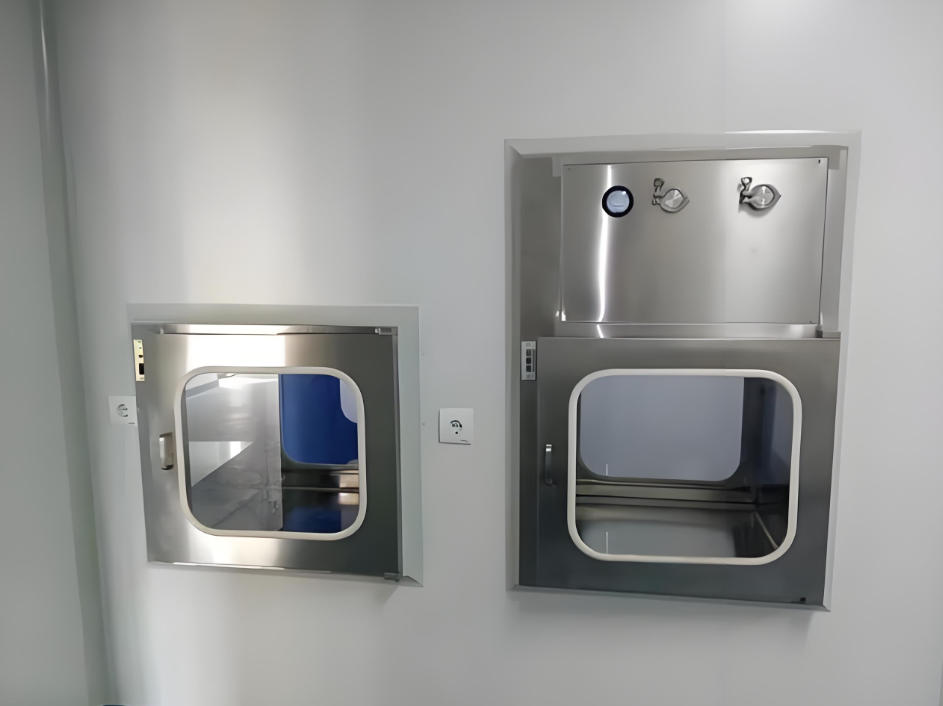
A pass-through chamber is an auxiliary device used in cleanrooms, designed for transferring small items between clean areas or between non-clean and clean areas. Its primary function is to reduce the frequency of door openings in cleanrooms, thereby minimizing contamination in controlled environments. Pass-through chambers are widely used in industries requiring air purification, such as microtechnology, biological laboratories, pharmaceutical plants, hospitals, food processing, LCD manufacturing, electronics factories, and more.
Constructed from stainless steel, pass-through chambers feature a smooth, easy-to-clean surface. The dual-door system is interlocked—either electronically or mechanically—to prevent both doors from being open simultaneously, effectively avoiding cross-contamination. An ultraviolet sterilization lamp is also equipped for disinfection purposes.
II. Classification
Pass-through chambers are divided into three main types:
Electronically interlocked pass-through chambers
Mechanically interlocked pass-through chambers
Self-cleaning (self-purifying) pass-through chambers
By working principle, they can also be categorized as:
Air shower pass-through chambers
Standard pass-through chambers
Laminar flow pass-through chambers
Customized models are available to meet specific requirements.
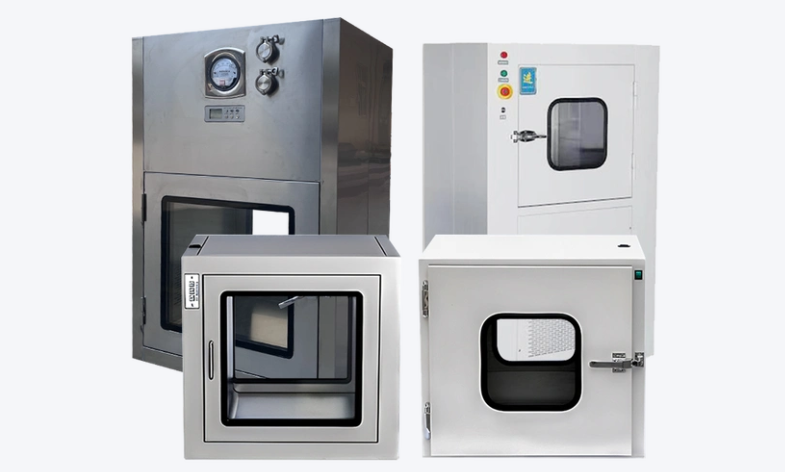
Optional accessories: Intercom, sterilization lamps, and other functional components.
III. Features
Short-distance models feature a stainless steel work surface that is smooth, wear-resistant, and easy to clean.
Long-distance models are equipped with non-powered rollers for effortless transfer of items.
Both doors are secured with mechanical or electronic interlocks (or electric strike locks) to prevent simultaneous opening.
Custom sizes and floor-mounted designs are available upon request.
Air nozzle outlet wind speed reaches over 20 m/s.
Equipped with high-efficiency particulate air (HEPA) filters (with separators), offering a filtration efficiency of 99.99% to ensure cleanroom standards.
EVA sealing material ensures excellent airtightness.
Optional two-way intercom system.
IV. Working Principle
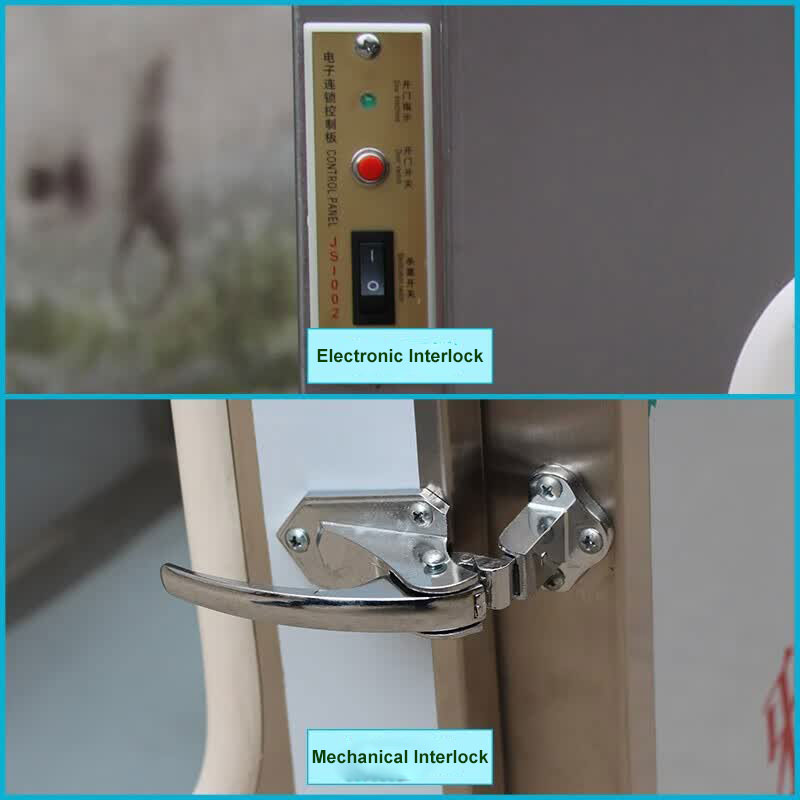
Mechanical Interlock: Uses an internal mechanical system to prevent both doors from opening at once. One door can only be opened after the other is fully closed.
Electronic Interlock: Utilizes integrated circuits, electromagnetic locks, control panels, and indicator lights. When one door is open, the other door’s indicator remains off, signaling that it cannot be opened, and the electromagnetic lock activates. Once the open door is closed, the other door’s electromagnetic lock releases, and its indicator lights up to show that it can now be opened.
V. Usage Guidelines
Pass-through chambers should be managed according to the cleanliness level of the higher-grade clean area they connect to. For example, a chamber between a coding room and a filling room should follow the filling room’s standards. After work, the clean area operator should wipe all internal surfaces and run the UV lamp for 30 minutes.
Material transfer must be separated from personnel flow, using dedicated material passages.
Incoming materials: Raw materials are unpacked or surface-cleaned before being sent through the pass-through chamber to a temporary storage area. Inner packaging materials are unwrapped externally before being transferred to the inner packaging room. The handover is documented by responsible personnel.
During transfer, strictly follow the “one door open at a time” rule. Place items via the outer door, close it, then open the inner door to retrieve them.
Outgoing materials from the clean area should first be moved to a material holding station, then transferred out following the reverse procedure.
All semi-finished products leaving the clean area must pass through the chamber to an external holding area before being transported to the packaging section.
Highly contaminating materials or waste should be transferred via a dedicated pass-through chamber to non-clean areas.
After use, clean the transfer area and the pass-through chamber , and ensure both doors are closed.
VI. Precautions
Transport using standard vehicles. Protect from rain and snow to prevent damage or corrosion.
Store in a warehouse with temperatures between -10°C to +40°C, humidity ≤80%, and free of corrosive gases.
Unpack carefully to avoid damage or personal injury.
After unboxing, verify the product matches the order, check for missing parts, and inspect for transport-related damage.
VII. Operating Procedures
Wipe items to be transferred with 0.5% peracetic acid or 5% iodine solution.
Open the outer door, place items inside quickly, spray the interior with 0.5% peracetic acid, and close the outer door.
Turn on the UV lamp inside the chamber and irradiate items for at least 15 minutes.
Notify personnel inside the clean area to open the inner door and retrieve the items.
Close the inner door after removal.