
What Parameters Need to Be Controlled in Cleanrooms & Relevant ISO Standard Specifications
- On 2026-06-06 14:21:15
- By 创始人
A cleanroom’s core management focuses on three key indicators: airborne particle control, temperature control and humidity control, with specific control thresholds defined by authoritative industry standards. The globally prevailing standard is ISO 14644-1:2015, which classifies cleanroom grades based on the concentration of suspended particles per cubic meter of air. It is critical to note that this standard only specifies permissible final particle concentration limits instead of construction design parameters such as air change rate, which is determined via customized engineering calculation during cleanroom design.
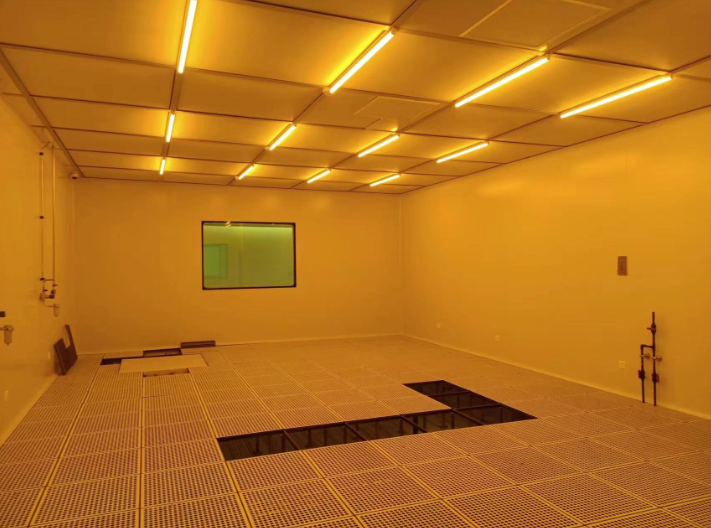
1. Cleanroom Classification per ISO 14644-1:2015
| ISO Class | Max allowable particles ≥0.1μm (pcs/m³) | Max allowable particles ≥0.5μm (pcs/m³) | Equivalent FS 209E Class |
|---|---|---|---|
| ISO 1 | ≤10 | — | — |
| ISO 2 | ≤100 | — | — |
| ISO 3 | ≤1,000 | ≤35 | Class 1 |
| ISO 4 | ≤10,000 | ≤352 | Class 10 |
| ISO 5 | ≤100,000 | ≤3,520 | Class 100 |
| ISO 6 | ≤1,000,000 | ≤35,200 | Class 1,000 |
| ISO 7 | — | ≤352,000 | Class 10,000 |
| ISO 8 | — | ≤3,520,000 | Class 100,000 |
ISO Class 5 (Class 100 cleanroom) features a mandatory threshold: the count of particles sized ≥0.5μm shall not exceed 3,520 per cubic meter. The air change rate serves merely as an engineering implementation method rather than a statutory benchmark.
2. Air Change Rate: No Fixed Default Values, Calculated on a Project-Specific Basis
A frequent industry inquiry concerns the standard air change rate for ISO Class 7 cleanrooms, yet no universal fixed value exists. ISO 14644-4 (Design, Construction and Start-up of Cleanrooms) only provides recommended ranges instead of mandatory regulatory values, and criteria vary across industrial sectors:
● ISO Class 5 (Unidirectional Airflow): Commonly accepted industry range: 240~600 air changes per hour (ACH). Calculated from vertical laminar airflow velocity of 0.36~0.54 m/s and floor-to-ceiling height of 2.6~3 m, the theoretical equivalent ACH falls between 430~650. While 240 ACH is viable for practical use, it will lead to longer room self-cleaning duration.
● ISO Class 6: 50~60 ACH, widely adopted for precision optics manufacturing and electronic component assembly.
● ISO Class 7: 20~30 ACH. China’s national standard GB 50073-2013 recommends 15~25 ACH, whereas GMP mandates 20~30 ACH for Grade C pharmaceutical clean areas; design parameters shall comply with applicable specifications of individual projects amid such discrepancies.
● ISO Class 8: 10~20 ACH.
In practical engineering design, the final air change rate is comprehensively computed referencing indoor particle generation rate, personnel occupancy density, equipment heat emission and required self-purification time instead of blind application of empirical reference figures.
3. Temperature & Humidity Specifications Determined by Production Processes
Thermal and hygrometric sensitivity varies drastically among different manufacturing workflows:
● Photolithography & biological incubation: 23±0.1℃, Relative Humidity (RH) 50±2%. A mere 0.5℃ temperature fluctuation may cause over 10% deviation in photolithography line width, hence stringent control requirements.
● Photoresist coating, packaging and testing: 22±0.5℃, RH 45±5%.
● Precision component assembly & inspection: 20~24℃, RH 40~60%.
● Warehouse and auxiliary non-production areas: 20~26℃, RH 40~60%.
4. Differential Pressure Requirements for Cross-Contamination Prevention
Differential pressure configuration blocks contaminated ambient air from infiltrating controlled clean spaces:
● ≥10 Pa between clean zones and non-clean areas
● ≥10 Pa between clean spaces and outdoor ambient environments
● ≥5 Pa between cleanrooms of different cleanliness classifications
Room differential pressure is regulated by adjusting fresh air supply and exhaust volume of Make-up Air Units (MAU). Insufficient positive pressure triggers infiltration of unfiltered dirty air; excessive positive pressure results in difficult door opening and unnecessary extra energy consumption.